Endoscopic Brow Lift: Natural Forehead Rejuvenation with Minimal Scars
Aging doesn’t happen evenly across the face. For many people, the first noticeable shift is in the upper third: the brows sit lower, the eyelids feel heavier, and the forehead can look more “tired” even when you’re well-rested. An endoscopic brow lift is a modern surgical option designed to restore a more youthful brow position using small incisions hidden in the hairline, often with less visible scarring than traditional approaches.
This guide explains why brow descent happens, what the endoscopic technique actually changes, and how recovery typically unfolds—so you can make a calm, informed decision.
Why Brow Lift Is Common in Facial Rejuvenation
A brow lift isn’t about creating a new face. Done well, it’s about restoring the brow to a position that fits your natural anatomy—so your eyes look open and rested, not “pulled.”
Many patients ask: “Do I need a brow lift, or is it just my eyelids?” The answer often comes down to brow position. If the brow has dropped, removing eyelid skin alone can sometimes under-correct (or create a heavier look later). In a comprehensive plan, brow position is evaluated alongside eyelids, forehead lines, and midface balance—this is why brow lifting is frequently discussed within broader facial rejuvenation planning.
Brow Descent & Facial Aging
Brow descent is a normal part of aging. Over time:
- The tissues that support the brow gradually relax.
- Repeated facial expressions can deepen forehead lines.
- The brow can settle lower, making the upper eyelids look fuller or heavier.
A simple way to picture it: the brow acts like a “frame” for the eyes. When the frame drops, the eyes can look smaller—even if your eyelids haven’t changed much.
If you’d like a broader overview of where brow lifting fits into upper-face planning, see facial rejuvenation.
What Is Endoscopic Brow Lift?
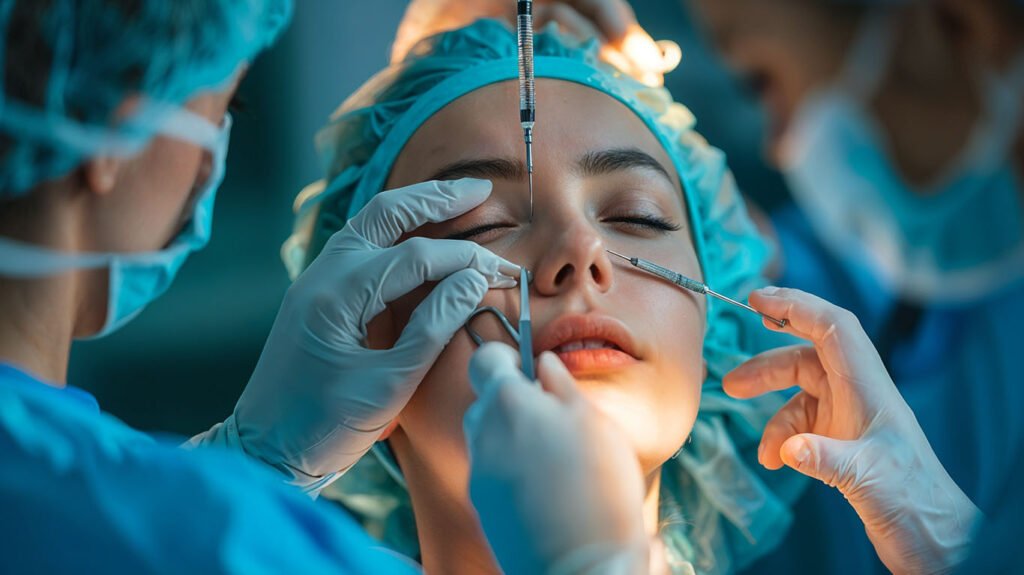
An endoscopic brow lift is a technique that uses a small camera (endoscope) and specialized instruments to reposition brow and forehead tissues through short hairline incisions. This allows the surgeon to work beneath the skin with precision, without the longer incisions used in some traditional approaches.
If you’re comparing terminology, you may also hear forehead lift used interchangeably (especially when discussing the upper third of the face). For a focused explanation, see forehead lift.
Technique & Incision
Most endoscopic approaches use several small incisions within the hair-bearing scalp, and the endoscope provides visualization of the underlying structures.
What gets adjusted can vary based on anatomy and goals, but the intention is consistent:
- Elevate a descended brow to a natural position
- Soften the “tired” or “heavy” upper-face look
- Maintain a result that matches your facial proportions (not an exaggerated arch)
A good consultation should include discussion of:
- Your natural brow shape (and how it differs side to side—almost everyone has asymmetry)
- Your hairline and incision planning
- Whether your goals are better served by brow lifting alone or combined with other procedures
For procedure-specific context, you can also review brow lift.
Recovery Timeline
Recovery after a brow lift is usually measured in phases: early healing (swelling/bruising and incision care), social recovery (looking “public ready”), and final refinement (settling of tissues and scar maturation).
Across reputable surgical guidance, early healing is often around 10–14 days, while subtle swelling can continue improving for weeks.
First Week
In the first 7 days, it’s common to experience:
- Swelling, tightness, and mild discomfort
- Bruising (often around the upper eyelids)
- Temporary numbness or altered sensation near the scalp incisions
Many surgeons advise gentle activity (like walking) and avoiding heavy lifting or bending early on. By about one week, a number of patients with the endoscopic approach feel ready to return to desk work—though this depends on swelling, bruising, and the nature of your job.
Practical tip: if your goal is to return to video calls quickly, plan for good lighting, elevated head positioning while resting, and give yourself flexibility—faces heal on their own schedule.
Weeks 2–4
This is typically the “back to routine” phase:
- Bruising fades and swelling continues to reduce
- Most people look increasingly presentable in public
- Light exercise may resume gradually, while strenuous workouts are usually delayed (your surgeon’s plan matters most)
Even once you feel normal, internal healing continues for several weeks, and the final brow position can subtly refine over time.
Before & After Gallery
Before-and-after photos are useful—but only when you know what you’re looking at.
When reviewing a brow lift before and after gallery, pay attention to:
- Natural brow shape (not an over-arched look)
- Symmetry improving (not perfection—faces are naturally asymmetric)
- Upper eyelid “openness” without a surprised expression
- Consistency of photo lighting/angle (to avoid misleading comparisons)
Surgeon Authority
A safe, natural endoscopic brow lift is less about “how high” the brow goes and more about planning, anatomy, and restraint.
When choosing a surgeon, look for:
- Board certification appropriate to facial aesthetic surgery (varies by region)
- Clear experience with endoscopic techniques
- A consultation that includes risks, alternatives, and realistic limitations (no guarantees)
- A plan tailored to your brow position, eyelid skin, hairline, and facial balance
Many patients also ask about safety: the endoscopic approach is widely used, but it’s still surgery—so the details matter (anesthesia planning, sterile technique, incision care, and follow-up). Patient selection matters too, and not everyone is an ideal candidate for the endoscopic method.
If you’re considering an endoscopic brow lift and want a professional assessment of brow position, eyelid balance, and whether a brow lift or forehead lift makes more sense for your anatomy, you can book an optional consultation in NYC.
Start here:
FAQs
How long is brow lift recovery?
Early healing is often around 10–14 days, with many people feeling more socially comfortable as swelling and bruising improve over the following weeks. Subtle refinement can continue for several weeks to months.
Is endoscopic brow lift safe?
In healthy candidates, endoscopic brow lifting is commonly performed and generally considered safe when done by a qualified surgeon in an appropriate surgical setting. Like any surgery, it carries risks (bleeding, infection, scarring, temporary or rarely persistent numbness, asymmetry, and need for revision). A good consultation should discuss your individual risk profile clearly.
Will I look surprised after brow lift?
A “surprised” look usually comes from over-elevation or an unnatural arch for your facial anatomy. Modern planning aims for a natural, proportional brow position rather than a dramatic change. Reviewing conservative before/after examples and clearly communicating your preferences helps avoid this outcome.
How long do results last?
Brow lift results are long-lasting, but not “permanent” in the sense that aging stops. The brow is repositioned, and most people enjoy a durable improvement for years, with gradual changes over time as tissues continue to age. Your baseline anatomy, skin quality, and lifestyle factors all influence longevity.