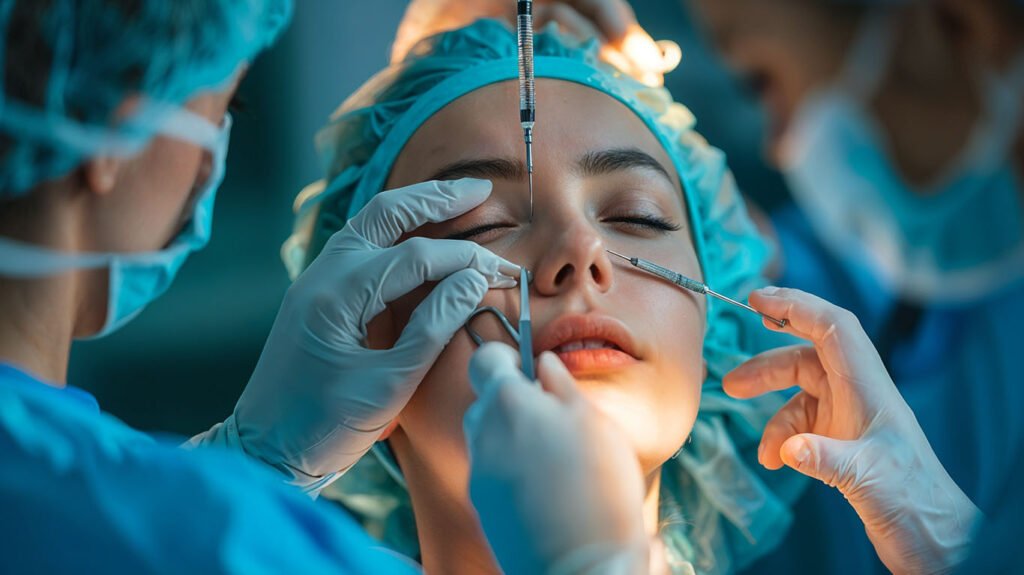
In aesthetic medicine, deciding between dermal fillers and fat transfer is a pivotal choice for those seeking subtle transformations that enhance natural beauty. Both approaches have unique advantages and limitations, and understanding them can help you make an informed decision that aligns with your goals.
Delivering Exceptional Care, Expert Treatments, Solutions for Your Beauty, Boost Confidence, and Ensure Outstanding Results with Support Every Step of Your Journey, Enhancing Your Natural Glow with Precision and Safety.
Understanding Dermal Fillers
Dermal fillers typically consist of hyaluronic acid or other biocompatible materials designed to add volume, smooth fine lines, and restore youthful contours. They are widely used for areas such as cheeks, lips, under-eyes, and nasolabial folds.
Advantages:
- Immediate Results: Changes are visible instantly.
- Non-Surgical: A minimally invasive procedure with virtually no downtime.
- Adjustable: Results can be refined in follow-up sessions for precision.
Limitations:
- Temporary: Effects usually last between 6–18 months.
- Maintenance Required: Regular touch-ups are necessary to sustain results.
- Volume Constraints: May not fully restore areas with significant tissue loss.
Dermal fillers are ideal for clients seeking quick, adjustable, and non-permanent aesthetic enhancements.
Exploring Fat Transfer
Fat transfer, also called autologous fat grafting, involves harvesting fat from areas like the abdomen or thighs, processing it, and reinjecting it into targeted facial regions.
Advantages:
- Long-Lasting Results: Once stabilized, transferred fat can remain indefinitely.
- Natural Material: Uses your own tissue, minimizing risk of allergic reactions.
- Dual Benefit: Body contouring at the donor site adds an extra aesthetic gain.
Limitations:
- Surgical Procedure: More invasive than fillers, with longer recovery.
- Higher Cost: Due to complexity and surgical requirements.
- Variable Absorption: Some injected fat may be reabsorbed over time, requiring adjustments.
Fat transfer suits those seeking permanent, natural, and holistic facial rejuvenation.
Comparing Longevity and Maintenance
One of the clearest distinctions between fillers and fat transfer lies in durability. Dermal fillers require periodic maintenance to maintain results, making them flexible but temporary. Fat transfer, after the initial stabilization phase, provides a long-term solution, which can feel like a “permanent signature” on your face.
Quick Note: Many clients start with fillers to test changes before considering fat transfer for long-lasting enhancement. This staged approach allows them to experience subtle transformations safely.
Aesthetic Outcomes and Natural Beauty
Both methods enhance natural beauty, but in different ways:
- Fillers are precise, allowing targeted corrections and shaping. They are ideal for fine-tuning facial features with subtle, undetectable results.
- Fat transfer restores volume more globally, harmonizing facial contours and giving a softer, more natural rejuvenation effect.
In practice, subtle transformations achieved through either method can dramatically improve confidence and self-perception.
Client Experience and Emotional Impact
Clients report distinct experiences with each approach:
- Dermal Fillers: Immediate satisfaction, minimal downtime, and the ability to adjust results in future sessions.
- Fat Transfer: Greater sense of permanence, natural feel, and a holistic rejuvenation that often surpasses expectations over time.
Important Insight: For those who enjoyed the benefits of invisible enhancements in our previous article, fat transfer can be seen as a more permanent evolution of the same principles, maintaining undetectable and authentic natural beauty.
Risk, Recovery, and Considerations
When comparing dermal fillers and fat transfer, several practical aspects stand out:
- Invasiveness: Fillers are minimally invasive and non-surgical, while fat transfer is a surgical procedure that requires more preparation and recovery time.
- Downtime: Filler procedures usually allow you to resume normal activities the same day, whereas fat transfer typically requires several days to a couple of weeks for full recovery.
- Pain or Discomfort: Fillers involve minimal discomfort, whereas fat transfer may cause moderate discomfort due to the surgical nature of fat harvesting and reinjection.
- Adjustability: Filler results can be fine-tuned or adjusted in follow-up sessions, offering high flexibility. Fat transfer, on the other hand, becomes more permanent once the fat stabilizes, with limited ability to modify outcomes.
- Longevity: Fillers last between 6 to 18 months, depending on the type and area treated. Fat transfer results, once fully integrated, can last for years and are often considered permanent.
This comparison helps you understand the practical differences, ensuring you choose the method that best fits your lifestyle, goals, and tolerance for recovery.
Integrating Both Approaches
For some clients, a combination strategy is ideal:
- Initial filler sessions to trial subtle adjustments and understand how the face responds.
- Transition to fat transfer for more permanent volume restoration once confidence in changes is established.
This staged approach allows the best of both worlds: immediate subtle transformations with long-lasting natural results.
Conclusion: Choosing Your Signature Enhancement
Both dermal fillers and fat transfer are powerful tools in aesthetic medicine. Your choice depends on:
- Desired longevity
- Tolerance for surgical procedures
- Volume needs and facial harmony
- Preference for immediate vs. long-term transformation
Key Takeaway: If you appreciated the invisible, refined results discussed in our previous post on subtle transformations, fat transfer can be seen as the next step, a permanent, undetectable enhancement that writes a lasting story on your face.
Frequently Asked Questions
Q1: What’s the main difference between fillers and fat transfer?
Fillers provide temporary, controlled volume, while fat transfer uses your own tissue for longer-lasting, natural results.
Q2: Which procedure is better for under-eye hollows?
Fat transfer offers a softer, longer-lasting solution, while fillers are ideal for minor contouring or touch-ups.
Q3: How long do results last for each method?
Fillers last 6–18 months depending on type, while fat transfer, once stabilized, can last for many years with proper care.
Q4: Can I switch from fillers to fat transfer later?
Yes, many clients transition to fat transfer for longevity after experiencing temporary results with fillers.